Most hard money lenders fund a percentage of the purchase and make you bring the rest in cash. That one rule quietly shapes every deal you do, because the money you put toward a down payment is money you can't put into the work that actually moves the value.
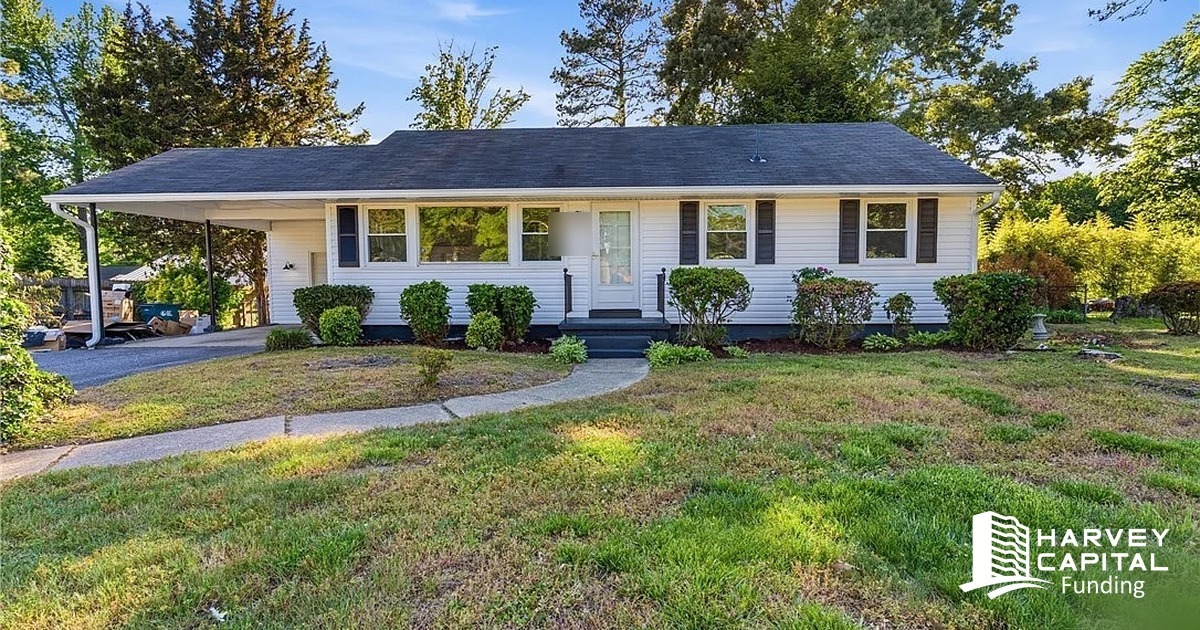
A Richmond flipper recently ran the other version of that math. He found a tired brick ranch, bought it for $183,000, and never put a dollar of his own cash into the buy. We funded 100% of the purchase. Six months later he sold it for $305,000.
The house nobody wanted to touch
The property was a brick ranch that had aged in place. Good bones, dated everything. The kind of house an experienced operator can walk through in ten minutes and read clearly: the structure is sound, the finishes are tired, and the gap between what it is and what it could be is exactly where the money lives. He bought it for $183,000.
Plenty of buyers walked past that house. An operator who knows the Richmond market saw a project with a clear path. That instinct — the ability to look past worn carpet and a dated kitchen and price what the house becomes — is the whole game. The financing only matters because it lets that instinct get funded.
Where his cash actually went
Here is the part that changes the math. Because we covered the entire purchase, the only cash he had to bring was the renovation, not a $183,000 acquisition on top of it.
He self-funded the work. There was no renovation holdback on this loan, so every dollar of his own money went straight into the things that make a buyer say yes: a new kitchen, renovated bathrooms, new flooring throughout, fresh paint, new lighting and fixtures. Same bones, a completely different house.
Think about the alternative. If a lender had funded only part of the purchase, this operator would have had to come up with cash just to close on the buy, before he spent a single dollar improving the property. That cash would have been parked in a down payment, doing nothing for the resale value. Instead, it went into the work. That is leverage used the right way: capital deployed where it builds value, not where it just satisfies a financing requirement.
Same bones, different house
The renovation wasn't exotic. It was disciplined. A kitchen that reads as new. Bathrooms that don't date the house. Flooring that runs clean through every room. Paint and lighting that make a walkthrough feel finished instead of in-progress. None of it is flashy on its own. Together, it's the difference between a house a buyer talks themselves out of and one they write an offer on.
He sold it for $305,000, about six months from purchase to sale. The gap between what he paid and what he sold for was $122,000 before renovation, carrying, and selling costs. We won't pretend to know his exact net, because his costs are his own. But the spread tells you the operator priced the deal right and executed the plan he saw on day one.
What we actually did here
Our role in this was simple, and that's the point. We're the supporting character in this story, not the hero.
We lend our own capital, so the decision to fund 100% of the purchase for a strong operator was ours to make. The credit decision happened in-house, not in a committee three states away. And when a deal like this comes together, we can turn a phone call into a written term sheet quickly, which is what lets an operator walk into a negotiation as a financed buyer instead of a maybe.
That last piece matters more than it sounds. A seller takes a credible, financed offer seriously. An operator who can move fast and close clean wins deals that a slower, more conditional buyer never gets a shot at. The funding structure didn't make this flip work. The operator did. But the structure made sure his cash went where his expertise could compound it.
That's the whole idea. A lender who funds the buy lets you spend your money on value. A lender who makes you front part of the purchase splits your cash before the work even starts. Same operator, same house, very different math.
Got a deal?
If you're an experienced operator who wants a lender that funds the purchase so your cash can go into the work, tell us about your deal on the Discuss My Deal page. It takes about a minute, and we'll respond the same day — and if it's a fit, we'll turn that conversation into a written term sheet you can put behind a real offer.