The deals worth studying aren't always the ones with the biggest spread. Sometimes the whole lesson is in how little risk an operator took to get a good result.
The deal
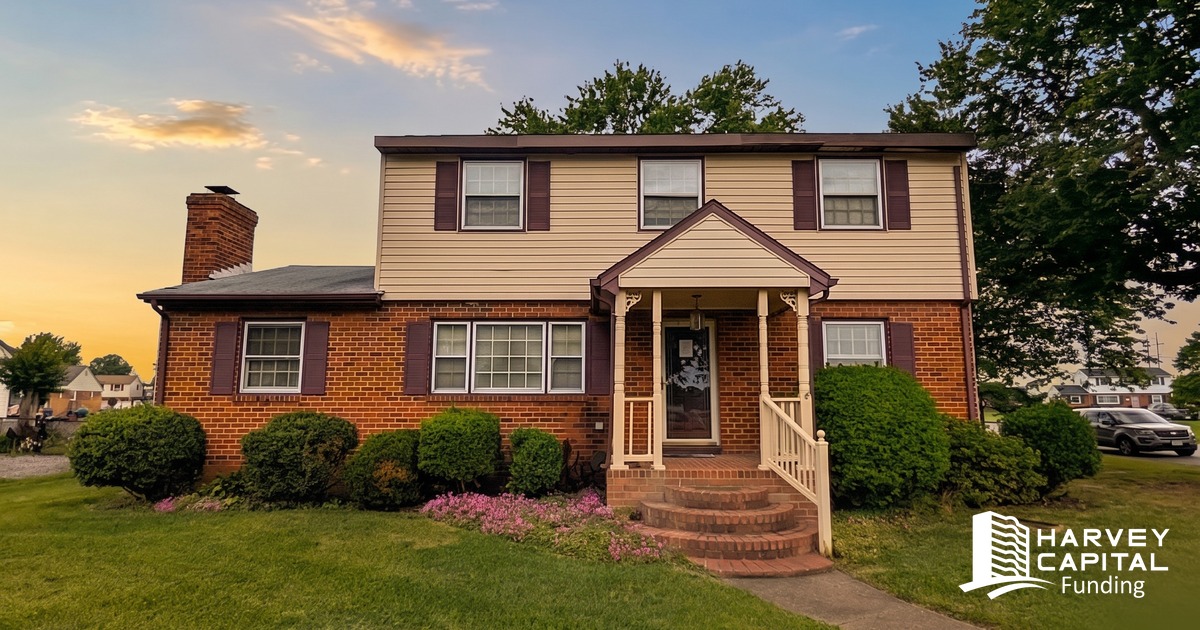
An experienced operator brought us a tired brick-and-siding two-story in Richmond — vacant, dated, the kind of house a bank won't lend on. They had it under contract at $233,000 and a clear path to a $300,000 value once it was renovated. The plan wasn't a flip. It was a BRRRR: buy, renovate, rent, refinance, and keep the property as a long-term rental.
How we structured it
We funded a $200,000 first-lien loan — 67% of the $300,000 after-repair value. The operator put $33,000 of their own cash into the purchase and funded the roughly $40,000 renovation out of pocket. First-lien position, short-term, interest-only — built to carry the property through the renovation and lease-up, then get paid off on the refinance.
- Purchase price: $233,000
- HCF first-lien loan: $200,000 (purchase-money)
- Cash in the deal: ~$33,000 down, plus a self-funded ~$40,000 renovation
- Loan-to-after-repair-value: 67%
- After-repair value: $300,000
- Outcome: refinanced into a long-term rental, paid off in about six months, zero days past due
Notice what isn't in that structure: we didn't finance the rehab, we didn't stretch the loan toward the value, and we didn't minimize the cash the operator had in the deal. They asked for a clean, conservative loan, and that's exactly what the deal called for.
Why the leverage is the story
The after-repair value is the most important number in any deal — everything else is built on top of it. Get the ARV right and you have room to work. Get it wrong and no amount of cheap money or good contracting saves you. Here, the ARV was solid at $300,000, and the operator borrowed against only 67% of it.
That left a 33% cushion between the loan and what the house was worth. That cushion is what protects an operator when something goes sideways — a soft market, a surprise behind the walls, a refinance that takes longer than planned. A more aggressive lender might have pushed the loan higher and called it a favor. It isn't one. The 30% you don't borrow is the margin that keeps a good deal from turning into a bad one.
What happened
The operator did the work, brought the property to its $300,000 value, refinanced into a long-term loan, and paid us off in about six months. Not a single day past due. No extension, no salvage job, no drama. They recovered their capital, kept the house as a rental, and moved on to the next one.
The takeaway
You don't need maximum leverage to win. You need the deal to survive surprises — and then you need to execute. This operator did both. They treated leverage as a tool, not a crutch, and they walked away with a cash-flowing rental and their capital intact.
That's the kind of deal we like to fund: a real operator, a real margin of safety, and a clean exit.
Got a deal?
If you're working a BRRRR or a flip in the Richmond area and you want a lender who'll structure it to survive the surprises, tell us about it on Discuss My Deal. It takes about a minute, and we'll respond the same day.