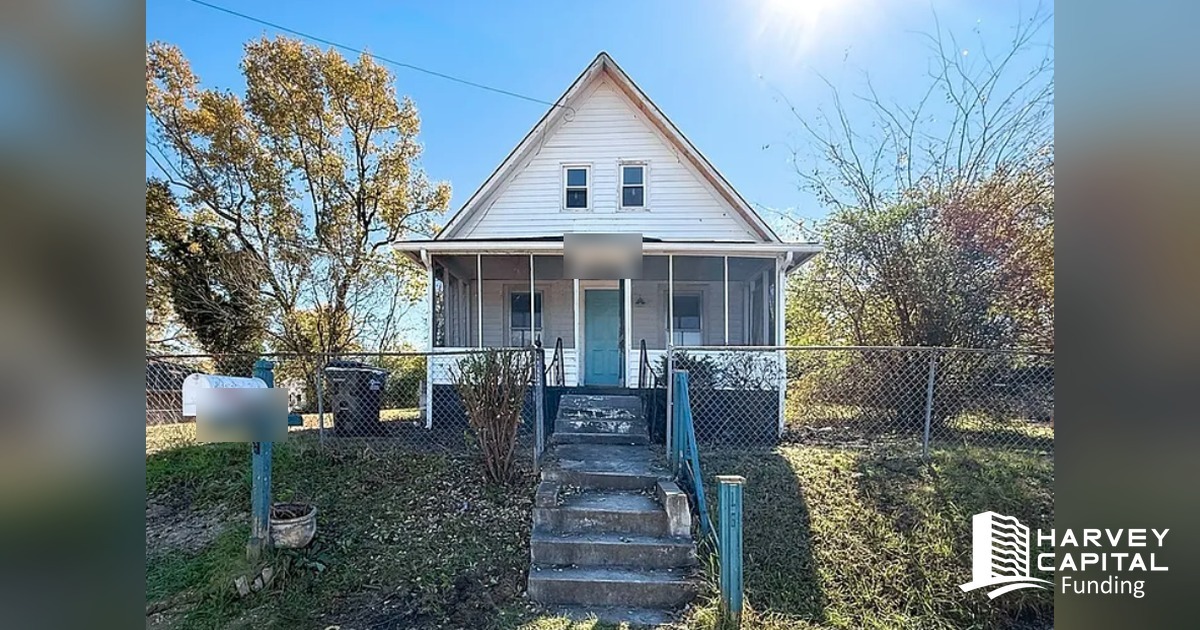
A Hopewell operator put a single-family house under contract for $84,600, with about $25,000 of work ahead of it. On paper, that's a clean little BRRRR. In practice, a deal that size is exactly where a lot of good operators get stuck — and not because the numbers are bad. It's because many hard money lenders carry loan minimums that quietly rule out anything this small.
We funded the whole thing anyway: 100% of the purchase and 100% of the renovation, in one $109,600 loan. The operator brought his closing costs and nothing else.
The deal on paper
- Purchase price: $84,600
- Renovation budget: $25,000
- All-in cost: $109,600
- After-repair value: ~$175,000
- Loan amount: $109,600
- Term: 9 months
- Down payment on the basis (the all-in cost): $0
The number that matters most is the last one. There was no down payment on the buy, no separate construction loan, and no second closing to chase rehab money after he already owned the house. One loan covered a property worth about $175,000 fixed up — roughly a $65,000 spread between what he was all-in for and what the finished house was worth.
The smallest deal is where operators get stranded
Plenty of lenders set a minimum loan amount, and a deal this size — total cost under $110,000 — often lands below it. A smaller loan takes nearly the same work to underwrite, fund, and service as a large one, so the small deals are the ones that get turned away.
That leaves an operator with a real problem. The math on a sub-$110,000 BRRRR can be excellent — this one had a $65,000 spread — and yet the deal sits there because the financing won't show up. You either pass on a good house or tie up your own cash to cover the gap a lender wouldn't.
We don't run a minimum that knocks out smaller deals. If the numbers work, we'll fund it. This one worked, so we did.
One loan for the purchase and the rehab — so you keep your cash
The way most BRRRR financing breaks down, you buy with one loan, then go fight for rehab money through a separate construction line — often a second closing, after you already own the house, when your cash is already committed.
We put the purchase and the renovation on a single note. The $25,000 in renovation funds sat ready to draw against as the work hit each stage. He requested funds, the money moved, and the job kept its schedule. He didn't have to front the rehab out of his own pocket and wait to be reimbursed.
That's the whole point of structuring it this way: your cash stays free for the next acquisition instead of getting buried in this one.
New to us, but not unproven
This was a new borrower to us. On paper, that's usually where a lender slows down — no history together, more questions, a thicker file.
But new to us isn't the same as unproven. This operator already held 22 rental properties, all on long-term financing. Think about what that record actually says. To put permanent debt on 22 houses, he had to qualify, close, and perform 22 times over.
That matters more than it might sound, because of how a loan like this gets paid back. A BRRRR — buy, rehab, rent, refinance, repeat — ends when the operator refinances into a long-term rental loan and uses those proceeds to pay off the short-term money. The refinance is the exit. A borrower who has already obtained long-term financing 22 times has proven he can reach that exit. He'd done the hard part, over and over, before he ever called us.
So we read the record for what it said and got to yes quickly — we didn't penalize him for being new.
The exit: a clean BRRRR
He did exactly what the numbers said he would. He finished the work, refinanced into a long-term rental loan, used those proceeds to pay us off, and kept the house as a rental.
He paid us off in under six months on a nine-month note. There was no prepayment penalty for paying early — we don't charge one. When a borrower is ready to pay us back ahead of schedule, that's a good outcome, and we're not going to tax it.
When the dust settled, he had a renovated rental producing income, his original cash back out of the deal, and a house worth roughly $175,000 that he owns and rents. That's a BRRRR done right.
What an operator should take from this
A small deal is not a weak deal. If you've got a BRRRR where the all-in cost lands comfortably under the after-repair value, the size of the loan shouldn't be the reason it dies. The right structure can finance the purchase and the renovation together, keep your cash free, and let you exit through the refinance you were always planning on.
Got a deal?
If you're buying, renovating, and refinancing in Central Virginia — even on the smaller deals other lenders won't touch — and you want a lender who can fund the purchase and the rehab in one loan and let you pay off early without a penalty, let's talk. Tell us about your deal on the Discuss My Deal page. It takes about a minute, and we'll respond the same day.