
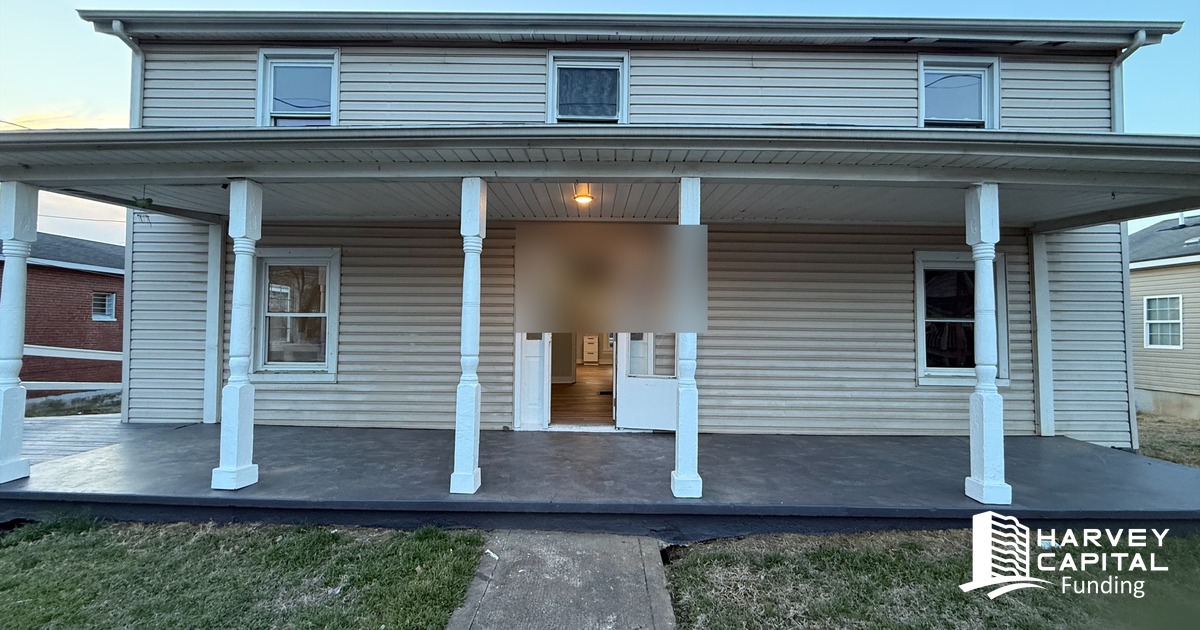
Most hard money case studies you read about end with a sale. This one didn't. The borrower bought a single-family home in Madison Heights, took it from a $38,000 purchase to a finished rehab, refinanced into long-term rental financing, and kept the house. From the day he called us, the plan was always to keep it. Our job was to fund the whole thing — purchase and rehab — and get out of the way when the permanent loan was ready.
He didn't want to sell it
The numbers worked for a flip. He could have listed the property after the rehab and made a clean margin. He didn't want to. He wanted a long-term rental in his portfolio, and the math on holding it — once the rehab was done — beat the math on selling.
Most short-term lenders structure the loan around an assumed sale at the end, then look at you sideways when you say "actually, I want to keep it." We don't. The exit on this one was always a refinance, and that's what we built around.
We funded the whole project
The purchase price was $38,000. The renovation budget was $40,000. We made a single $78,000 loan that covered both — purchase plus full rehab — in first-lien position. He brought almost none of his own cash to the deal.
For a BRRRR operator, that is the entire point. The whole reason you're doing BRRRR instead of buying with conventional financing is to recycle your capital — keep it free for the next deal, the next contractor, the next emergency. A lender who funds 80% of the purchase and asks you to come out of pocket for the rehab defeats the strategy. We funded the project, not just the closing.
The terms gave the deal room to breathe
Nine months, interest-only, 12%, 3 points at origination, $700 doc prep — first lien on the property. The 9 months matters. A 3-month or 6-month term forces a BRRRR borrower to rush the rehab, rush the lease-up, rush the refi. Banks doing DSCR refinances want to see a property that's actually rented, sometimes with seasoning, and that takes time.
A 9-month runway means you do the work right, get a real tenant in, and refi when the bank is ready — not when your hard money loan is about to mature. He paid us off five months early, in March. He had four more months of runway he didn't end up needing. That's the whole point — we give you the room, you use what you need.
This is the kind of deal we want more of
He bought a property at $38,000 against an after-repair value north of $160,000. That is a lot of daylight between the purchase price and the finished number — real margin built into the deal on day one. When a borrower comes to us with a property bought that conservatively, the loan moves through underwriting in a different gear. We're not chasing every additional piece of paper to feel okay about it. We're not pressing for more reserves or pushing the docs list further. The numbers have so much room in them that the file underwrites itself, and we get out of your way and fund.
The deals that grind — the ones where we end up asking for more, going back and forth on the rehab budget, requesting a stronger statement of liquidity — those are the deals where the ARV is being stretched to make the LTV work, the rehab number is thin, or the borrower is barely in the deal themselves. Conservative ARVs and real buying margin are not just a discipline that protects the borrower. They are what makes our process feel easy for both sides. If you've got a property under contract that you bought with real margin, expect the application to be short, the docs list to be short, and the answer to come fast.
The bank's appraiser confirmed it
When he refinanced into his long-term DSCR loan, the bank ordered its own appraisal as part of their underwriting. That appraisal came in at approximately $206,000 — $46,000 above the $160,000 after-repair value we had underwritten at funding.
His buying margin wasn't theoretical. The third-party appraiser confirmed the deal was every bit as good as he and we both thought it was. That's why his refi math worked, and why he was able to take us out cleanly five months early.
What happens when you tell us "I want to keep it"
Nothing weird. We structure the loan for the exit you actually want. If you want to flip it, we'll fund the deal that fits a flip. If you want to BRRRR it, we'll fund the deal that fits a BRRRR — bigger loan covering both purchase and rehab, longer term that lets you season the property, and zero pressure to sell at the back end.
We hold our own loans, so we don't need to push you into a fast sale to satisfy a buyer of the paper. We just want the loan to pay off cleanly. Refi or sale — both look the same on our end.
Want to talk through a deal like this?
If you've got a property under contract that you bought conservatively — real daylight between what you paid and what the finished house is worth — that is exactly the deal we want to see. The form on Discuss My Deal takes about a minute. We'll respond the same day.