
A house built before 1978 comes with a federal rule most rehab budgets never mention. Getting it wrong can cost up to $49,772 per violation.
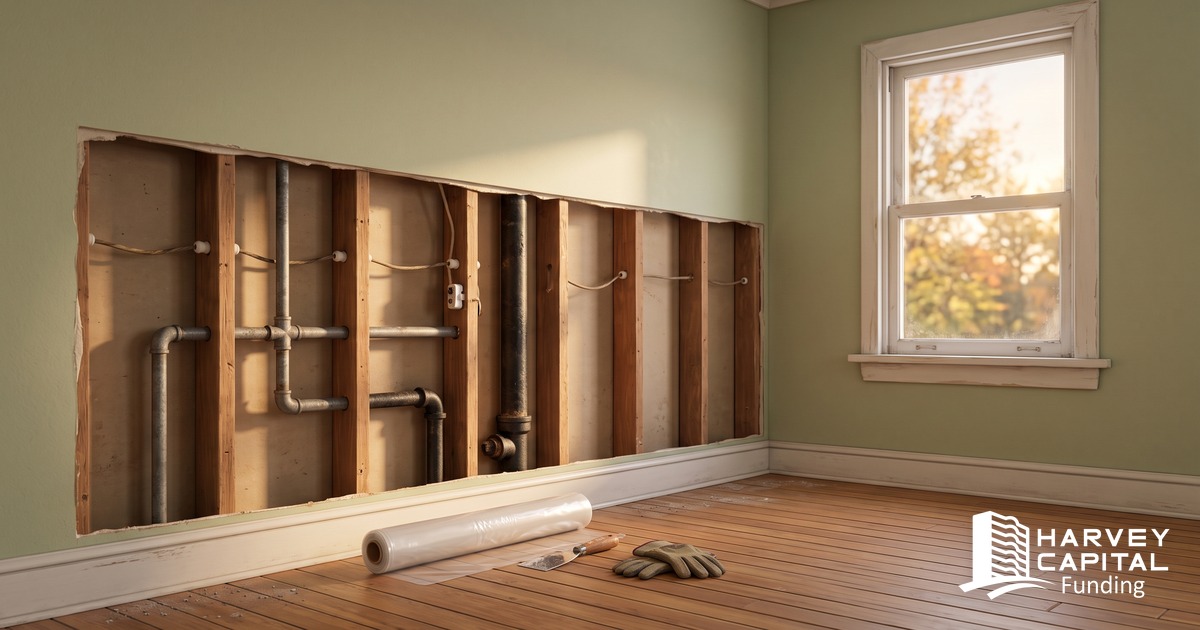
The walkthrough shows you paint, floors, and a tired kitchen. On an older house, the expensive part is behind them. Some of it is a regulation, some of it is plumbing and wiring, and all of it belongs in your numbers before you write the offer, not after demo day.
Why 1978 Is the Line
Lead-based paint was banned for residential use in 1978. Houses built before then are presumed to have it somewhere, usually under later coats, on windows, doors, trim, porches, and exterior siding. Intact paint under newer paint is not much of a problem. Scraping, sanding, cutting, and demolishing it is, because that turns it into dust.
That is why the federal rules are built around disturbing paint, not around the paint simply being there. And it is why they matter most to the people who renovate old houses for a living.
The Renovation Rule, in Plain English
The EPA's Renovation, Repair and Painting Rule (the RRP rule) requires that anyone paid to perform work that disturbs painted surfaces in a home built before 1978 be certified, and that the people doing the work be trained in lead-safe work practices.
Yes, it covers flippers and landlords
Homeowners working on the house they live in are generally outside the rule. The EPA is explicit that the exemption does not hold if you rent all or part of the home, or if you buy, renovate, and sell homes for profit. The EPA's own word for that last group is "house flipper." If you do your own work on a flip or a rental, the certification requirement is yours, not just your contractor's.
Who enforces it in Virginia
A handful of states run their own version of the program. Virginia is not one of them, so the EPA administers and enforces the rule here directly.
When a job is small enough to be exempt
Minor repair and maintenance is outside the rule if it disturbs 6 square feet or less of painted surface per room inside, or 20 square feet or less on the exterior. Two exceptions to the exception:
- Window replacement is never exempt, no matter how small the area.
- Prohibited work practices are never exempt either (see below).
Be honest about what that means for a typical flip. New windows, drywall or plaster demo, a kitchen or bath gut, and scraping the exterior for paint are all well past those thresholds. Most real rehab scopes on a pre-1978 house are covered.
What certification takes
- Firm certification. The company doing the work applies to the EPA. The fee is $300, and the certification is good for five years.
- A certified renovator on the job. At least one person completes an 8-hour initial course from an EPA-accredited trainer, including 2 hours of hands-on training, and takes refresher training to stay certified. Other workers can be trained on the job by the certified renovator.
That is a form, a fee, and a day of class. It is not a heavy lift compared with the penalty for skipping it.
What the work itself requires
- Before work starts, give the owner and any occupants the EPA's "Renovate Right" pamphlet. On an occupied rental, that means your tenants.
- Contain the work area. Warning signs, plastic sheeting on floors and over openings, and HVAC vents covered so dust stays where it is made.
- Skip the prohibited methods. No open-flame burning or torching of paint, no high-speed sanding, grinding, or blasting unless the tool has a HEPA exhaust attachment, and no heat guns at 1,100 degrees Fahrenheit or hotter.
- Clean up and verify it. HEPA vacuuming, wet wiping, and a cleaning verification step before the area is released.
- Keep the records. Documentation of compliance is kept for three years after the job.
Test it or presume it
You do not have to assume every surface has lead. A certified renovator can test the specific components you will disturb with an EPA-recognized test kit, or a certified inspector can do a full lead inspection. Components that test negative fall outside the rule. Anything untested is treated as if it contains lead.
One thing to know before you test: whatever you learn becomes known information about the house, and known information has to be disclosed when you sell or rent it. That is not a reason to avoid testing. It is a reason to test with a plan for what you will do with the answer.
What getting it wrong costs
The RRP rule is enforced under the Toxic Substances Control Act. The maximum civil penalty, as adjusted for inflation, is currently $49,772 per violation, and under that law each day a violation continues can count as a separate violation. Actual penalties depend on the case. The ceiling is what should get your attention.
When You Sell or Rent It: the Disclosure Rule
A separate federal rule applies at the other end of the deal. Before a buyer signs a contract or a tenant signs a lease on most housing built before 1978, the seller or landlord, along with the agents involved, has to:
- Disclose any known information about lead-based paint or lead hazards in the home.
- Provide any available records and reports on it.
- Give the buyer or tenant the EPA pamphlet "Protect Your Family From Lead in Your Home."
- Include a Lead Warning Statement in, or attached to, the contract or lease.
- For sales, give the buyer a 10-day period to have a lead paint inspection or risk assessment done. The parties can agree in writing to change that window, and the buyer can waive it.
Short-term leases of 100 days or less are exempt, and so is housing a certified inspector has found free of lead-based paint.
For a flipper, the practical point is timing. A buyer's 10-day inspection right is part of every pre-1978 sale, so your listing timeline should account for it. For a landlord, the disclosure goes into every lease on a pre-1978 unit, and the RRP rule applies to any turnover work that disturbs more paint than the minor-repair limits allow.
The Rest of What the Walls Hide
Lead is the item with a federal rule attached. It is not the only thing an older house hides from a walkthrough. These are the systems that most often surprise an older-house budget:
- Galvanized steel supply lines. Common in older houses, and they corrode from the inside, which shows up as low water pressure or discolored water. Look at the pipes coming off the water heater and under the sinks. Galvanized pipe is gray and threaded, and a magnet will stick to it. It will not stick to copper.
- Cast-iron drain lines. They crack, scale up inside, and let roots in, and you cannot see any of it from the basement. A camera run down the main drain is the only real way to know.
- Original wiring. Knob-and-tube in the oldest houses, ungrounded two-prong outlets, undersized service, and older panels. Beyond the repair cost, some insurers will ask about it or decline to write the policy until it is replaced.
- Buried oil tanks. A fill pipe or vent pipe sticking up near the foundation can mean an old heating oil tank is still in the ground. Ask before you close, not after.
- Asbestos-containing materials. Some older floor tile, pipe insulation, and textured ceilings contain it. Test before demo, not during.
None of these kill a deal on their own. Each of them kills a budget that did not include it.
How to Price It Before the Offer
- Check the year built on the county record before you write the offer. 1977 or earlier, plan for lead paint until a test says otherwise.
- Ask your GC for the firm's EPA certification and the renovator's certificate with the bid. A contractor who does not have them is either about to get them or is pricing the job as if the rule did not exist. If you are doing the work yourself on a flip, the certification is yours to get.
- Put lead-safe setup and cleanup in the scope as its own line. Containment, HEPA cleanup, and verification take time and materials. If they are not on the bid, they are not in the price. See our guide to contractor bid red flags for what else a thin bid leaves out.
- Before your deposit goes hard, run a camera down the main drain, look at the supply lines at the water heater, and have an electrician open the panel.
- Build the findings into the budget and the contingency, then check the deal still works. Our guide to building a rehab budget that holds walks through the rest.
Why This Is Worth the Trouble
Older houses are not a niche. Nearly half of American homes were built before 1980, and they are getting older every year. We wrote about why that is good news for people who renovate them. The operators who do well with them are the ones who price the old-house items up front instead of discovering them in month four.
When you send us a deal on an older house, send the scope with these lines already in it. A budget that has priced the rule and the systems is a budget we can underwrite quickly, and it is one that is much more likely to hold.
Call 804-208-0465 or use the Discuss My Deal form.
This article is general information, not legal advice. Rule details and penalty amounts come from the EPA's Lead Renovation, Repair and Painting Program pages, the EPA's Lead-Based Paint Disclosure Rule pages, and 40 CFR Part 19 as of September 2026. Check the current EPA guidance for your specific project.