
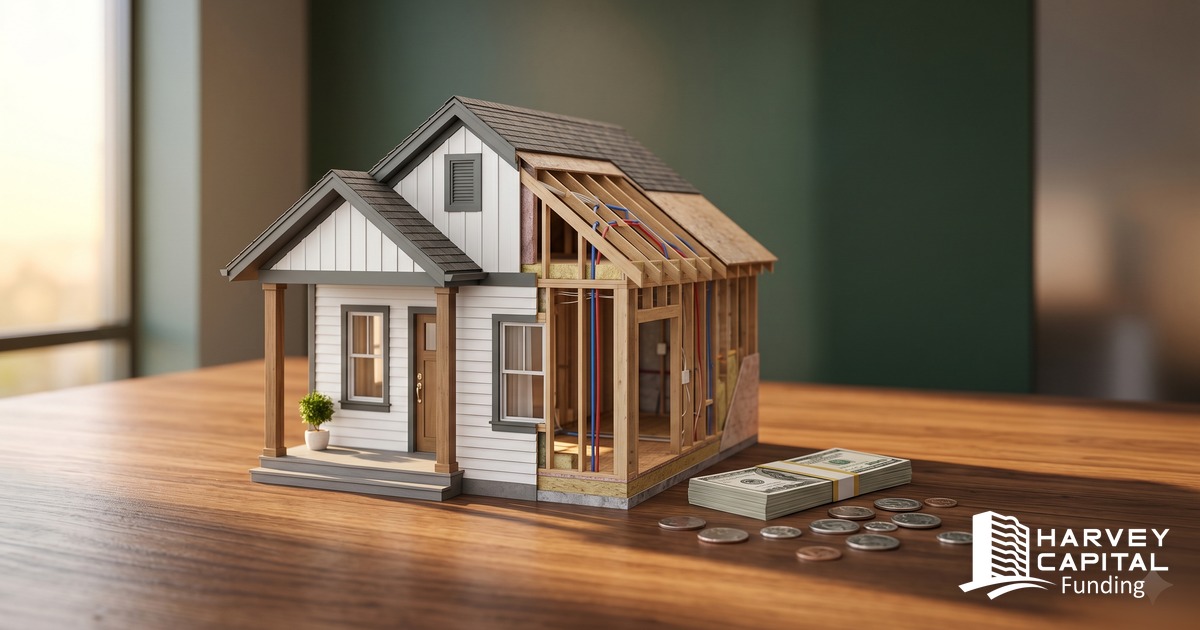
ARV is the most important number in your deal. Get it wrong and nothing else can save you. Comps, condition, days on market, the spread you're banking on at the closing table months from now — all of it rides on getting that after-repair value right, and we will never tell you to take it lightly.
But here's the thing: most operators respect the ARV and then quietly undermine it with the second number on the page. You pull comps, adjust for square footage and condition, sanity-check against what's actually moving in the neighborhood. You do the work on ARV. The number that wrecks otherwise-good deals is the one you didn't sweat the same way: the rehab budget. ARV tells you what the deal is worth. The rehab budget is what protects it. Nail the first, then build a second number you didn't have to guess at.
Why rehab budgets get lowballed
The honest reason rehab budgets come in too low isn't laziness. It's that you can only price what you can see.
You walk the house and you scope the obvious stuff: paint, flooring, cabinets, countertops, a vanity, some fixtures. You can picture all of it, so you can price all of it. The trouble is that the things you can't see, you price at zero. Not low. Zero. And those are the line items that move a budget the most.
Then demo starts and the walls come open. Now you find the old knob-and-tube wiring nobody could see behind the drywall. A supply line that's been weeping for years and finally lets go. Rot under the tub where water sat. A panel that won't pass inspection and has to be replaced before the county signs off on anything. None of that was on your scope sheet because none of it was visible the day you wrote the number.
Soft costs are the other quiet leak. Permits cost money and take time. Dumpsters and debris hauling add up fast on a full gut. The utilities run the whole time the house sits vacant, and somebody is paying that bill — that's you. And when the timeline slips, your carrying cost keeps running whether the house is producing or not. Two more things sink budgets, and they're both about discipline: taking the GC's opening number as the final number, and running no contingency line at all. The budget assumes everything goes exactly to plan, which is the one thing renovations reliably don't do.
Get a real bid before you close
The single highest-leverage move you can make is to get a written, line-item bid from a licensed general contractor before you close — not a per-square-foot estimate scribbled on the back of a card.
A per-square-foot number is a guess dressed up as a budget. It tells you nothing about whether this specific house needs a new panel, whether the HVAC is on its last season, or whether the plumbing has to be repiped. A real line-item bid forces the GC to actually price each piece of the job, and that process surfaces problems while you can still walk away or renegotiate the purchase price. After you close, that leverage is gone.
If a contractor won't put a real bid in writing before you commit, that's information too.
Walk the mechanicals first
When you walk the property, fight the urge to start in the kitchen. The kitchen and baths are where the money shows, but they're not where budgets die. The mechanicals are. Walk these first, every time:
- Roof: age, condition, any active leaks or sagging.
- HVAC: how old, whether it runs, whether it's adequate for the square footage.
- Electrical panel: capacity, condition, whether it will pass.
- Plumbing supply lines: material, age, any signs of failure.
- Water heater: age and condition.
- Foundation and grading: cracks, water intrusion, how the lot drains.
These are the line items that turn a clean cosmetic flip into a deal that bleeds. A finished kitchen is worthless if you spent the whole budget getting there and the panel and the supply lines are still waiting. Price the bones before you fall in love with the finishes.
Carry a real contingency
A rehab budget without a contingency line is a wish list. You need a number set aside specifically for the things you can't see until the walls are open, because there will be things.
Commonly that's 10 to 20 percent of the rehab budget, and where you land inside that range depends on the house. A clean cosmetic refresh on a newer property sits at the lower end. A full gut on an older home, where you genuinely don't know what's behind the plaster, belongs at the higher end. The older and rougher the house, the more you carry.
The contingency isn't padding and it isn't pessimism. It's the line item that lets you absorb the surprise without going back for an unplanned check or stopping the job cold. A deal that can't survive a normal contingency is a deal that was never as tight as it looked.
Count the soft costs
The construction number is only part of the spend. Build the rest of it in deliberately:
- Permits, including the time they add to the schedule.
- Debris removal and dumpsters.
- Utilities for the entire time the property sits vacant.
- Holding cost for the whole timeline, plus a buffer.
That last one is where most operators underwrite themselves into trouble. Carrying cost isn't a footnote. It runs every single month the house is in your hands, and it doesn't care whether the work is moving or stalled.
Pad the timeline
Every extra month is carrying cost, full stop. A three-month rehab that takes five didn't just lose you two months of patience — it lost you two months of holding cost, and that comes straight out of margin even when the construction number was dead on.
So budget the timeline as honestly as you budget the construction. If your crew says three months, ask yourself what five looks like on paper, because permits run long, materials get backordered, and the surprise behind the wall takes a week to sort out. A timeline you'd be embarrassed to admit to is usually the realistic one.
Stress-test the whole thing
Before you commit, run the deal through one simple test: add 20 percent to your rehab budget and see what's left.
If a 20 percent overrun turns the deal from a win into a loss, the deal is too tight to do. That's not a reason to find a way to make the number work — it's the deal telling you the truth. A flip with real margin can absorb a bad surprise and still pay you. A flip without it is one open wall away from being underwater, and you won't know which one you're standing in until demo is already done.
What happens when the number is wrong
Here's the failure mode this whole article is built to help you avoid. You get the rehab budget 30 percent too low, and you run out of money at roughly 70 percent done.
Now you're holding a half-gutted house. You can't sell it, because nobody buys a property with the kitchen torn out and no permits closed. You can't refinance it, because it won't appraise or pass inspection in that condition. And you can't finish it without writing an unplanned check you didn't budget for and may not have. That's the spot a lowballed rehab number puts you in — and it has nothing to do with whether your ARV was right. The ARV can be perfect and you can still lose the deal here.
Where a second set of eyes helps
This is where the lending side earns its keep, and it's worth being plain about it. When we underwrite a loan, we pressure-test both numbers — the ARV and the rehab budget. If either one looks optimistic, you hear it before you're committed, not after the walls are open and the money's already moving.
We also finance 100 percent of the renovation through draws. That matters more than it sounds, because the budget that actually gets funded on your timeline is the realistic, fully-scoped one. A budget that's missing the panel and the supply lines and the contingency isn't just risky for you — it's the budget that leaves you short at a draw when you can least afford it. A realistic number keeps the draws flowing when you need them.
A second set of eyes on the rehab budget protects your money the same way a second look at the ARV does. You're the one running the job and carrying the risk. Our part is making sure the number you're betting on is one you didn't have to guess at.
Got a deal?
If you're working a deal and you want a lender that will pressure-test your numbers with you before you're committed — and finance the purchase and 100% of the renovation through draws — tell us about it on the Discuss My Deal page. We'd rather flag an optimistic budget early than watch a good operator run out of money at 70 percent done.