
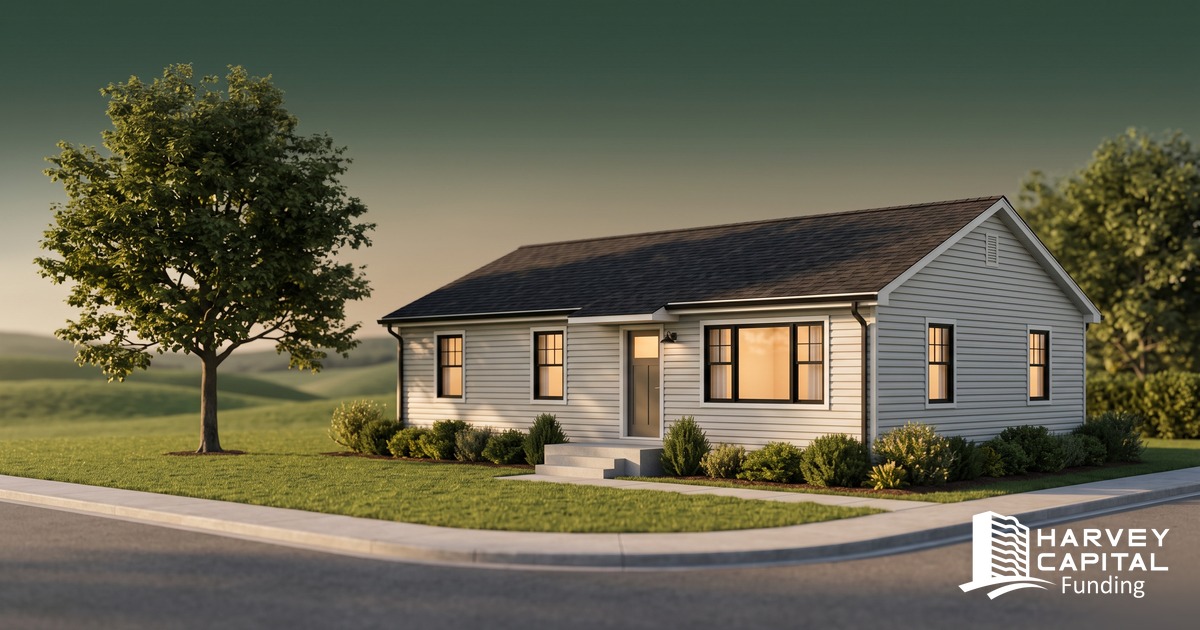
Martinsville, Virginia. A 912-square-foot single-family, three bedrooms, built 1967, on a corner lot. One of nine deals the same operator sent us in a single week in May, and the one our own underwriting brief flagged as the tightest.
The Operator
He has closed more than thirty loans with us. Not thirty applications. Thirty funded, performing loans, most of them small single-family houses in Southside and Lynchburg, bought, renovated, leased, and refinanced into long-term rental debt. The playbook does not change much from house to house, and that consistency is most of why a nine-property batch can move through our shop in a week.
He sends the whole stack at once. Nine addresses, his after-repair value on each, his scope, his exit. We pull our own comps on every one and size every loan to our number. On eight of the nine, our value and his were close. On this one they were not.
The House
A one-story ranch from 1967, aluminum and vinyl siding, 912 square feet, three bedrooms and one bath. Recorded purchase price: $65,000. He submitted an after-repair value of $150,000.
Our comp pull came back at $130,000. Martinsville's sold comps split into two clusters, renovated houses selling in the $100 to $165 per square foot range and distressed ones well under $80. The whole case for $150,000 rested on one renovated sale a block away. We weighted it, blended in the automated estimate and an active listing of similar size, and landed on a $120,000 to $140,000 range with $130,000 in the middle. The brief said what it said: tightest of the nine, only works at the conservative number.
The Structure
We lent on our number. $95,000 first lien, six months, interest only. Zero origination points and a single $700 document preparation fee, the same pricing every repeat borrower on our book gets. Application in the portal on a Wednesday. Wire the following Thursday. Eight days.
Sizing to $130,000 instead of $150,000 changed one thing: the loan amount. It did not change the answer, and it did not change the speed. When the borrower's value and ours differ, we say so, lend on ours, and close.
The Exit
Four months in, the renovation was done and the DSCR lender refinancing him into long-term rental debt ordered its own appraisal. It came back at $153,000. Above his number by $3,000. Above ours by $23,000.
That puts our $95,000 loan at 62% of the exit value. His payoff letter is already issued for mid-October, a month ahead of the November maturity. The house becomes a rental, the loan becomes a completed line on his record, and the cushion between $130,000 and $153,000 belongs entirely to him.
What This Means for Your Deal
Two things worth taking from this file.
First, a conservative ARV from your lender is not a no. It is the number the loan gets built on. If your value is right, you keep the difference at exit. If ours is right, the loan still fit. Either way the deal closed in eight days.
Second, the operator did the thing that made the fast close possible. He sent complete files, his own ARV with comps behind it, and a track record that had already been verified on the previous thirty loans. Our job was to underwrite the house, not re-underwrite him.
If you have a house under contract and a number you believe in, send it. Call 804-208-0465 or use the Discuss My Deal form. We will pull our own comps, tell you where we land and why, and if the loan works at our number, you will have terms within a day.