
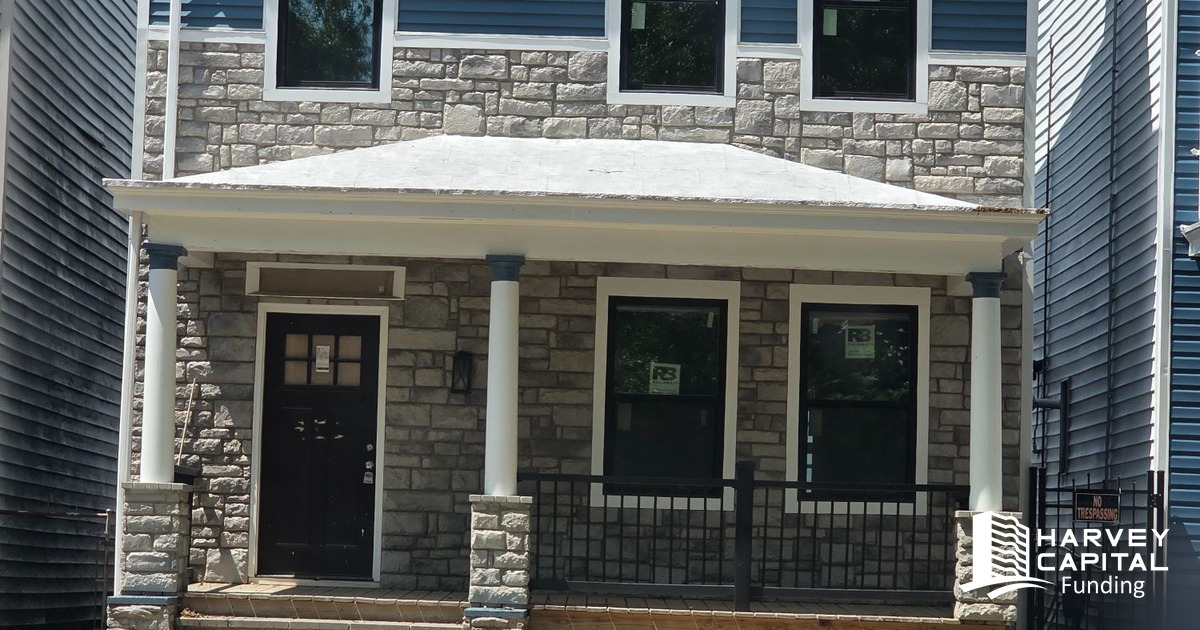
Richmond, Virginia. A 1920 single-family, renovated top to bottom, owned free and clear. The operator had a second property under contract and a bank telling him ninety days. The contract did not have ninety days.
The Problem Was Timing, Not Equity
This operator was not short on assets. He owned a fully renovated house in the city with no mortgage on it, worth $390,000. What he was short on was time. The purchase he had under contract needed cash at the table, and the bank's answer was a process measured in months. Every week of that process was a week the seller could walk.
He called us on a Tuesday. His words were that the clock was ticking. That is the most common opening line we hear, and it is usually the right reason to use hard money: not because the deal is marginal, but because the calendar is.
The Structure
We wrote a $235,000 first lien against the renovated house at 60% of its $390,000 value. Nine-month term, interest only. The loan is secured by the house he already owned, not by the property he was buying, so the seller on the other side of his purchase never had to agree to anything.
It was his first real estate loan. That is not a problem for us when the collateral is real and the position is conservative. A paid-off house at 60% loan-to-value is about as clean as a first lien gets.
The Part That Made It Work Day to Day
The loan carried an interest reserve. At closing, the full nine months of interest, $22,912.50, was set aside out of the loan proceeds and held. Each month the payment comes out of that reserve. His operating account never sees the debit.
If he pays the loan off early, which is the plan, the unused months come back to him. There is no prepayment penalty and no minimum interest. He is spending his cash on the second property, not on carrying the first one. We wrote up how the reserve works and when we build one into a loan.
The Timeline
Application on a Tuesday. Approved with conditions two days later. Title, insurance with us named as mortgagee, and the vesting into his entity were papered by the settlement agent over the following two weeks. We wired $201,692.50 to the closing table twenty-two days after the first call, and his purchase closed at the same table.
Total lender fees were $10,395: four points on the loan plus a $995 document preparation fee. Everything else on the settlement statement was title, recording, and insurance.
Why the Bank Could Not Do This
Not because the collateral was weak. A paid-off house at 60% is a loan any bank would be glad to hold. The problem is the process around it: an appraisal queue, a committee calendar, and an underwriting file built for a borrower with years of tax returns on rental income. None of that fits inside a purchase contract with a closing date three weeks out. We lend our own capital and make our own credit decisions, so the file moves at the speed of the documents, not the speed of the calendar.
What a Paid-Off House Is Actually For
A lot of operators treat a free-and-clear property as a trophy. It is better understood as a checkbook. The equity in it can close a deal in three weeks, carry its own interest while it does, and go back to being a paid-off house the day the second deal refinances or sells. Nothing about the property changed. It just went to work for a few months.
If you own property with real equity and have a deal a bank cannot fund on your timeline, call us at 804-208-0465 or use the Discuss My Deal form. We will tell you what the equity supports, what the term looks like, and whether a reserve makes sense, usually within a day.