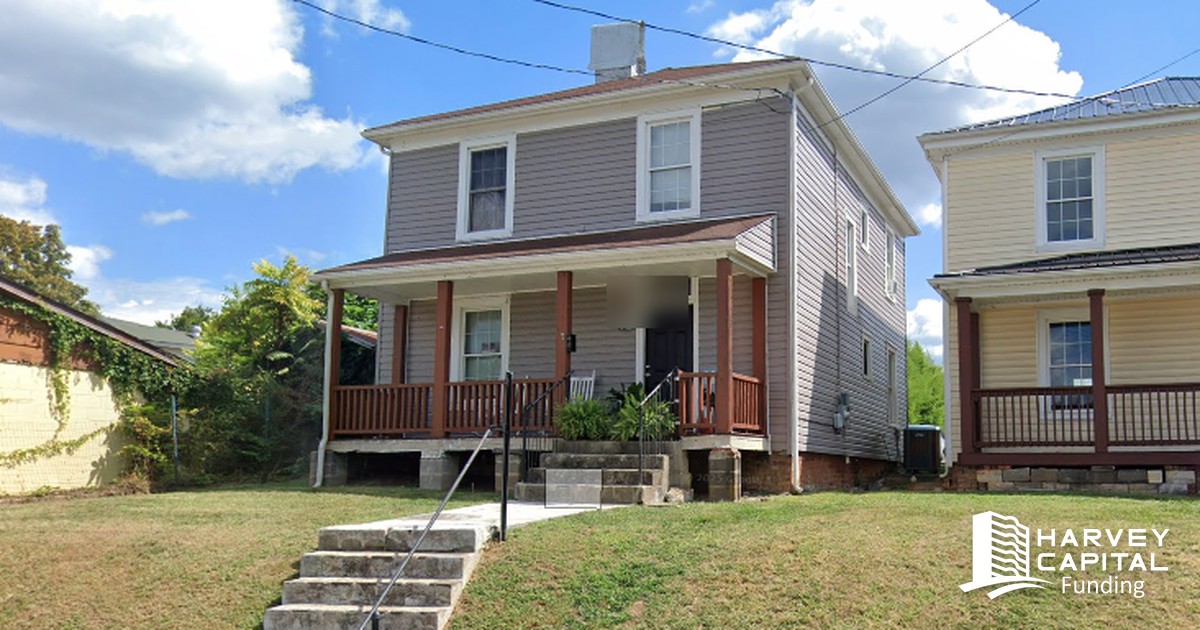
A repeat Lynchburg operator picked up a two-story single-family for $165,000 this spring. By late summer the note was paid off, the house was leased, and the property was sitting in his rental portfolio behind long-term financing. The part worth writing about is what the loan cost him to open: $700. Total.
The Deal
The house came to us the way most of this operator's deals do: identified, priced, and with the plan already written. Purchase at $165,000. After-repair value of $191,000. His own crew handling the renovation, and a DSCR refinance lined up as the exit once the property was leased.
We funded a $124,000 first lien on a six-month note. That is 75% of the purchase price and 65% of the after-repair value. He brought the balance of the purchase himself and paid for his own renovation, which kept the loan simple: no holdback, no draw schedule, one wire in and one payoff out.
The Fee Line
Here is the closing math on the loan itself. Origination points: zero. Document preparation: $700. That was the entire cost to open a $124,000 loan.
That pricing is not a promotion, and it is not what a first file looks like. It is what a lending relationship looks like after this operator has run more than twenty loans through us and paid off every one. The first loan with any borrower carries the full weight of underwriting: the track record verification, the entity documents, the deep dive. By the twentieth, we are underwriting the property, because the borrower has already proven himself. The work is smaller, so the cost is smaller. We price that honestly instead of keeping the difference.
The Playbook
If you have read our other case studies, you know this one: buy the house, renovate it, lease it, refinance into long-term debt, keep the rental. This operator has turned that cycle into a production line across Lynchburg, and short-term capital is the tool that makes the cycle spin. The hard money loan is not the point. The portfolio is the point. The loan just gets the house from auction-condition to bankable.
The Payoff
The note had a November maturity. It did not come close to needing it. The renovation finished, the property leased, the DSCR refinance closed, and the loan paid off months ahead of schedule. No extensions, no drama, no calls. The kind of payoff that is boring for everyone involved, which is exactly how a payoff should feel.
What This Means for You
If you are running the same playbook (buying, renovating, holding), the question worth asking your lender is not just "what is the rate." Ask what the relationship earns. Ask what loan number ten looks like, and loan number twenty. A lender who prices every deal like your first file is telling you the relationship is worth nothing.
Have a deal under contract? Send it over: we usually have a term sheet back within 24 hours. 804-208-0465.